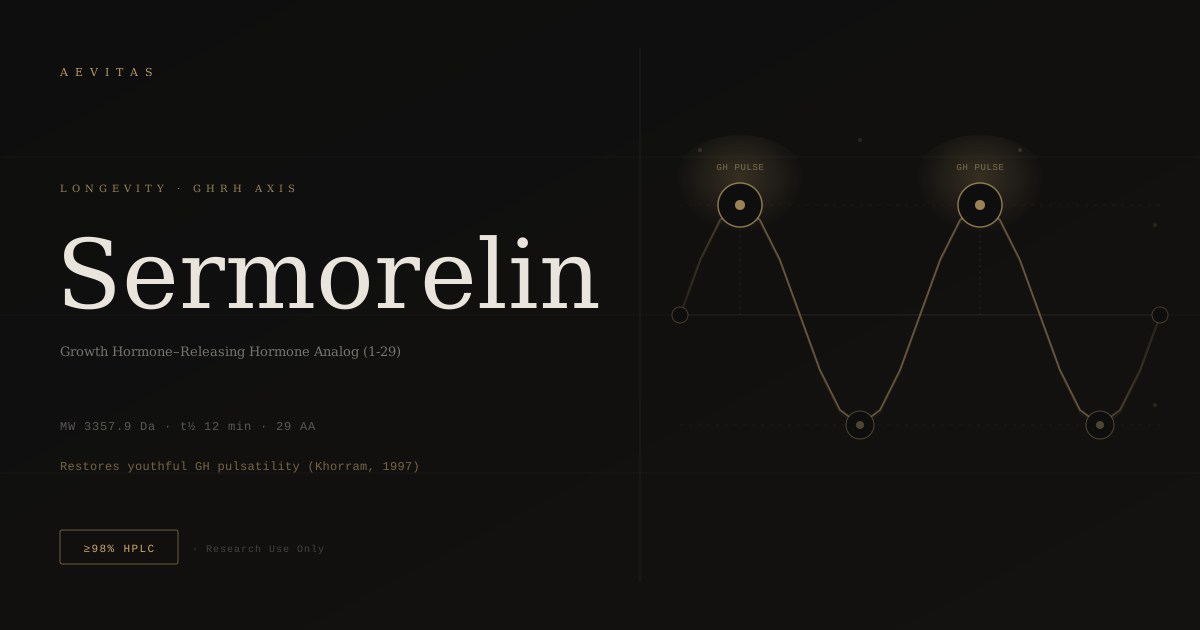
Sermorelin (GHRH 1–44)
Sermorelin is a 44-amino-acid GHRH analog that stimulates pituitary somatotrophs to release growth hormone physiologically. It preserves the GH feedback loop — unlike exogenous GH — making it the primary tool for studying GH-axis restoration in aging research.
- Half-life
- 0.25 h
- MW
- 3357.9
- Purity
- 98.1%
- Sequence
- YADAIFTNSYRKVLGQLSARKLLQDIMSRQQGESNQERGARARL
Mechanism
Sermorelin is the 44-amino-acid N-terminal fragment of endogenous growth hormone-releasing hormone (GHRH) and acts as a full agonist at the GHRH receptor (GHRHR) on pituitary somatotrophs. Receptor binding activates adenylate cyclase, raising intracellular cAMP, which triggers GH synthesis and pulsatile release into portal circulation. Unlike exogenous GH, Sermorelin preserves the physiological feedback loop: elevated IGF-1 and GH suppress further Sermorelin-stimulated release, preventing supraphysiological GH exposure. GH secretion declines ~14% per decade after age 30; Khorram et al. (1997, PMID: 9275068) demonstrated impaired GHRH-stimulated GH secretion in elderly subjects alongside reduced somatotroph responsiveness, establishing the rationale for GHRH-analogue research in aging.
What is Sermorelin?
Sermorelin (GHRH 1–44) is a synthetic 44-amino-acid analog of endogenous growth hormone-releasing hormone (GHRH) that stimulates the pituitary gland to release growth hormone in its natural pulsatile pattern, preserving the physiological GH feedback loop that exogenous GH administration bypasses. First studied clinically in the 1980s as a diagnostic agent for GH deficiency, Sermorelin has become a central research tool in aging biology due to the well-documented decline in GH secretion with age — approximately 14% per decade after 30 — and its implications for body composition, bone density, sleep architecture, and metabolic function.
Mechanism of Action
Sermorelin is a full agonist at the GHRH receptor (GHRHR) expressed on anterior pituitary somatotroph cells. Receptor binding activates adenylate cyclase, elevating intracellular cyclic AMP (cAMP), which in turn triggers GH gene transcription, synthesis, and pulsatile secretion into portal circulation.
The critical distinction between Sermorelin and exogenous recombinant GH is the preservation of physiological feedback: elevated GH and IGF-1 levels suppress further GHRHR-mediated release, preventing supraphysiological GH exposure. This self-limiting mechanism makes Sermorelin-stimulated GH secretion a closer model of endogenous GH pulsatility than exogenous administration.
Key mechanistic features:
- GHRHR agonism — Full agonist activity at pituitary somatotroph GHRH receptors
- Pulsatile GH release — Preserves physiological GH secretion pattern and amplitude
- IGF-1 axis stimulation — Elevated GH drives hepatic IGF-1 synthesis; secondary effects on muscle, bone, adipose
- Feedback-loop preservation — Somatostatin and IGF-1 negative feedback prevents GH excess
- Somatotroph maintenance — Research suggests chronic GHRH stimulation may preserve somatotroph cell number and function with aging
Key Research
Khorram et al., 1997 (J. Clin. Endocrinol. Metab., PMID: 9275068) — Examined GHRH-stimulated GH secretion in elderly versus young subjects. Found significantly impaired GHRH responsiveness in older individuals despite relatively preserved somatotroph cell populations, establishing that the primary age-related GH deficit lies in reduced GHRH stimulus rather than intrinsic somatotroph failure. This study is the mechanistic foundation for GHRH-analog research in anti-aging.
Corpas et al., 1993 (J. Clin. Endocrinol. Metab., PMID: 8852583) — Demonstrated that Sermorelin administered twice daily to older men (60–75 years) for 14 days significantly increased mean GH pulse amplitude and 24-hour integrated GH secretion, without the side-effect profile associated with exogenous GH.
Research Applications
Researchers studying Sermorelin typically investigate:
- GH pulse amplitude and frequency — GHRH challenge tests in aging animal and human models
- Body composition — Lean mass, adipose distribution in GH-deficient models
- Bone density — Osteoblast activity, bone mineral density markers
- Sleep architecture — Slow-wave sleep (SWS) restoration; GH secretion is predominantly nocturnal
- Somatotroph biology — Receptor downregulation, somatotroph count with chronic stimulation
Physical Properties
| Property | Value |
|---|---|
| Sequence | YADAIFTNSYRKVLGQLSARKLLQDIMSRQQGESNQERGARARL (44 AA) |
| Molecular weight | 3,357.9 Da |
| Half-life | ~10–20 minutes (0.25 hours) |
| Purity (Aevitas) | ≥98% HPLC |
| Storage | −20°C, desiccated; lyophilized stable 24+ months |
| Form | Lyophilized powder |
Frequently Asked Questions
What is Sermorelin used for in research? Sermorelin is used to study GH-axis restoration in aging models, somatotroph biology, and the downstream effects of physiological GH pulsatility on body composition, bone, sleep, and metabolism. It is considered a safer research model of GH stimulation than exogenous GH due to its feedback-loop preservation.
How do injectable peptides like Sermorelin compare to growth hormone for anti-aging research? Sermorelin stimulates endogenous GH release and preserves the pituitary-hypothalamic feedback loop. Exogenous GH bypasses this feedback, creating supraphysiological GH and IGF-1 exposure. For research purposes, Sermorelin provides a more physiologically faithful model of GH-axis function in aging.
What does research show about Sermorelin for anti-aging? Clinical studies show Sermorelin significantly increases GH pulse amplitude in elderly subjects (Corpas et al., 1993) and restores GH secretion patterns disrupted by aging-related GHRH decline (Khorram et al., 1997). Downstream IGF-1, body composition, and bone density effects are secondary endpoints studied in longer-duration models.
Is Aevitas Sermorelin research-grade? Yes. Aevitas Sermorelin is supplied at ≥98% HPLC purity, verified by an independent third-party laboratory. Every batch ships with a numbered certificate of analysis. Research Use Only — not for human consumption.
Aevitas Sermorelin — Research Grade
Aevitas supplies Sermorelin as a lyophilized powder at ≥98% HPLC purity, independently verified by a third-party laboratory. Every batch ships with its certificate of analysis.
Research Use Only — Not for human consumption.
Browse Longevity Protocols → | View COA Library → | [Order Sermorelin →](/product/sermorelin-2mg)
Related resources