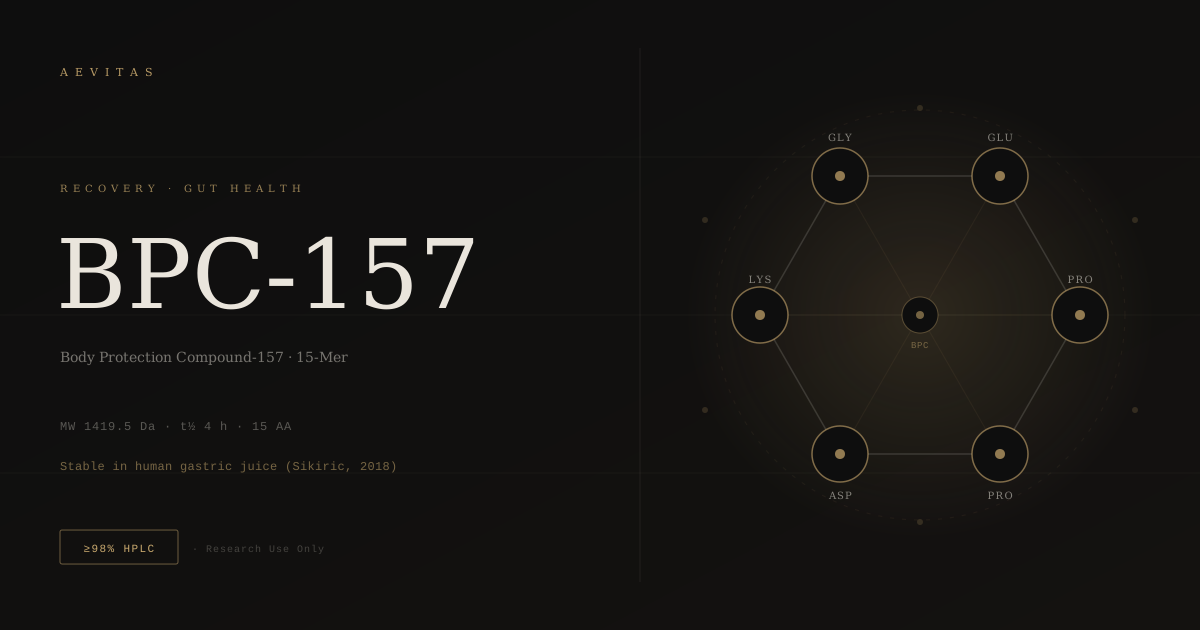
BPC-157 (Body Protection Compound 157)
BPC-157 is a 15-amino-acid synthetic peptide derived from human gastric juice protein that promotes angiogenesis, accelerates tendon and ligament healing, and modulates dopaminergic and serotonergic systems. One of the most studied recovery peptides.
- Half-life
- 4 h
- MW
- 1419.5
- Purity
- 98.2%
- Sequence
- GEPPPGKPADDAGLV
Mechanism
BPC-157 (pentadecapeptide) acts through multiple convergent pathways: it upregulates VEGF and its receptor VEGFR-2, driving angiogenesis and endothelial cell migration into damaged tissue. It activates the FAK-paxillin pathway to promote fibroblast and tenocyte motility, and modulates nitric oxide (NO) synthesis to improve vascular tone and tissue perfusion. BPC-157 normalises dopamine and serotonin receptor expression disrupted by neurotoxic agents and attenuates neurological injury via vagal nerve signalling. Its gastroprotective effects stem from upregulation of EGF receptor and prostaglandin pathways in GI mucosa. Unlike most peptides, BPC-157 shows activity via both parenteral and oral routes in animal models.
What is BPC-157?
BPC-157 (body protection compound 157) is a 15-amino-acid synthetic pentadecapeptide derived from the sequence of human gastric juice protein BPC that promotes angiogenesis, accelerates tendon and ligament healing, protects GI mucosa, and modulates dopaminergic and serotonergic neural circuits. Originally isolated and characterised by Sikiric and colleagues at the University of Zagreb, BPC-157 has been tested across hundreds of preclinical studies examining musculoskeletal repair, organ protection, and neurological recovery. Its stability in gastric acid and activity via both systemic and oral routes in animal models distinguish it from most research peptides (Sikiric et al., 2018, PMID: 29210636).
Mechanism of Action
BPC-157 acts through multiple convergent pathways rather than a single receptor target. Its primary mechanism in tissue repair is VEGF (vascular endothelial growth factor) upregulation, which drives angiogenesis — the formation of new capillaries into damaged tissue. This vascular response is essential for delivering nutrients and clearing inflammatory mediators from injury sites.
In tendon and ligament models, BPC-157 activates the FAK (focal adhesion kinase)-paxillin signalling axis, promoting fibroblast and tenocyte migration into the injured matrix. It also upregulates nitric oxide (NO) synthase, improving vascular tone and tissue perfusion around injury sites.
Neurologically, BPC-157 normalises dopamine and serotonin receptor expression disrupted by neurotoxic challenges in animal models, and has shown attenuation of serotonin syndrome and dopaminergic injury via vagal-brain axis signalling.
Its gastroprotective effects involve upregulation of EGF receptor signalling and prostaglandin pathways in GI mucosa, explaining its longstanding use as a gastric mucosal protective agent in preclinical ulcer and colitis models.
Key effects:
- Angiogenesis — VEGF-A and VEGFR-2 upregulation drives capillary ingrowth into injury sites
- Fibroblast/tenocyte migration — FAK-paxillin pathway activation accelerates tissue matrix repopulation
- Nitric oxide modulation — Improved vascular perfusion and tone in damaged tissue
- GI mucosal protection — EGF receptor and prostaglandin pathways; active orally in animal models
- Dopaminergic normalisation — Receptor expression restoration after neurotoxic challenge
Key Research
Sikiric et al., 2018 (Curr. Pharm. Des., PMID: 29210636) — Comprehensive review of BPC-157's effects on striated, smooth, and heart muscle. Documents angiogenic mechanism, NOsystem interaction, and multi-organ healing data across 30+ years of preclinical research by the Zagreb group.
Sikiric et al., 2015 (Curr. Pharm. Des., PMID: 26431946) — Reviews BPC-157's neuroprotective and neuro-modulatory effects, including dopaminergic system rescue and serotonin syndrome attenuation in rat models.
Tendon-to-bone healing studies from the Zagreb group demonstrate BPC-157 accelerates rotator cuff repair, anterior cruciate ligament healing, and Achilles tendon regeneration in controlled animal surgery models, with histologically confirmed collagen fibre organisation improvements.
Research Applications
Researchers studying BPC-157 typically investigate:
- Tendon & ligament repair — Achilles, rotator cuff, ACL models; collagen fibre quality
- GI ulcer and colitis models — mucosal healing rate, barrier integrity markers
- Neurological recovery — dopamine/serotonin system restoration after pharmacological challenge
- Bone healing — fracture union rate, callus quality in rodent models
- Cardiovascular protection — cardiac muscle healing, fistula closure
Physical Properties
| Property | Value |
|---|---|
| Sequence | Gly-Glu-Pro-Pro-Pro-Gly-Lys-Pro-Ala-Asp-Asp-Ala-Gly-Leu-Val |
| One-letter | GEPPPGKPADDAGLV |
| Molecular weight | 1,419.5 Da |
| Half-life | ~4 hours (parenteral); active orally in animal models |
| Purity (Aevitas) | ≥98% HPLC |
| Storage | −20°C, desiccated; lyophilized stable 24+ months |
| Form | Lyophilized powder |
Frequently Asked Questions
What is BPC-157 used for in research? BPC-157 is studied primarily for musculoskeletal repair (tendon, ligament, bone), GI mucosal healing, and neurological recovery. It is one of the most published research peptides with preclinical evidence across over 300 studies, predominantly from the University of Zagreb research group.
What are the best injectable peptides for recovery research? BPC-157 and TB-500 are the most studied injectable recovery peptides. BPC-157 is preferred for tendon/ligament and GI applications; TB-500 targets actin-dependent cell migration and musculoskeletal regeneration. Many researchers use both together in stacked recovery protocols.
How does BPC-157 work for joint repair? BPC-157 promotes joint repair primarily through angiogenesis (VEGF upregulation), fibroblast migration (FAK-paxillin pathway), and improved tissue perfusion (NO synthesis). In tendon-to-bone healing models, histological analysis shows improved collagen fibre organisation and faster integration compared to saline controls.
Is BPC-157 research-grade at Aevitas? Yes. Aevitas BPC-157 is supplied at ≥98% HPLC purity, verified by an independent third-party laboratory. Every batch ships with a certificate of analysis viewable in the COA library. Research Use Only — not for human consumption.
Aevitas BPC-157 — Research Grade
Aevitas supplies BPC-157 as a lyophilized powder at ≥98% HPLC purity, independently verified by a third-party laboratory. Every batch ships with its certificate of analysis.
Research Use Only — Not for human consumption.
Browse Recovery Protocols → | View COA Library → | [Order BPC-157 →](/product/bpc-157-5mg)