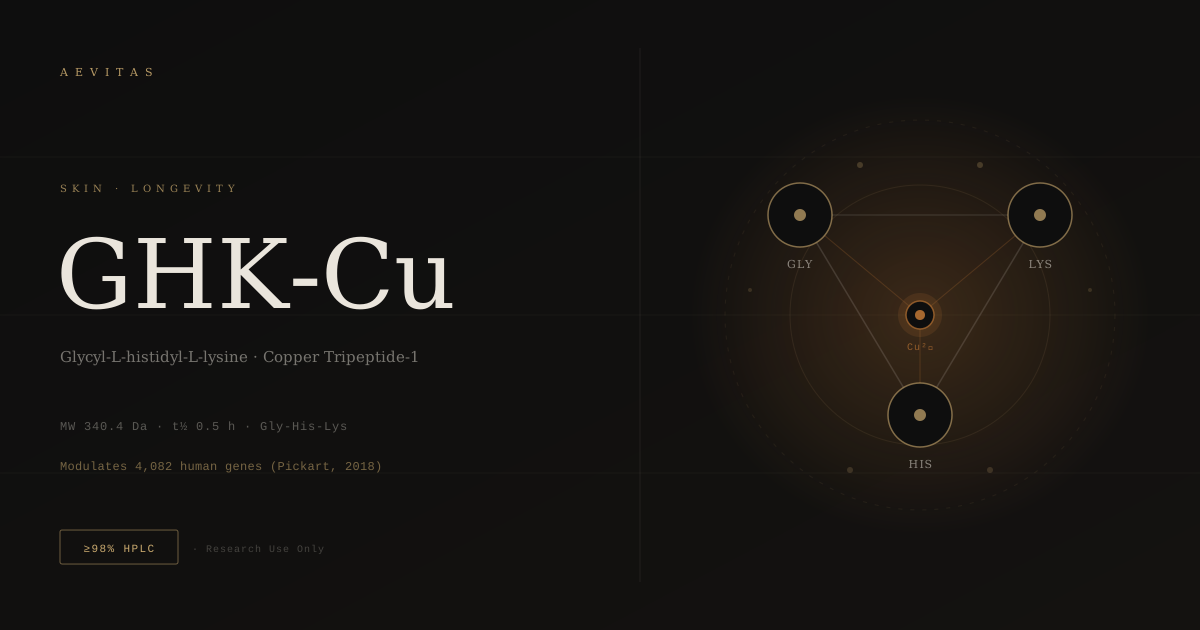
GHK-Cu (Copper Tripeptide-1)
GHK-Cu is a naturally occurring copper-binding tripeptide that stimulates collagen synthesis, activates tissue repair, and modulates over 4,000 human aging-related genes. Plasma concentrations decline ~60% between ages 20 and 60.
- Half-life
- 0.5 h
- MW
- 340.4
- Purity
- 98.5%
- Sequence
- Gly-His-Lys · Cu²⁺
Mechanism
GHK-Cu chelates Cu²⁺ into a bioavailable complex that activates fibroblast collagen synthesis (types I, III, VI), promotes angiogenesis via VEGF-A upregulation, and modulates MMP-2/9 for balanced extracellular matrix remodeling. TGF-β modulation prevents excess fibrosis while supporting normal wound healing. Gene expression profiling identifies GHK-Cu as a regulator of 4,082 human genes including SOD1 (antioxidant), BRCA1/2 (DNA repair), BDNF and NGF (neurotrophin), and senescence-associated secretory phenotype (SASP) suppressors. Plasma GHK concentrations decline ~60% between ages 20 and 60, from ~200 ng/mL to ~80 ng/mL.
What is GHK-Cu?
GHK-Cu (glycyl-L-histidyl-L-lysine copper complex) is a naturally occurring copper-binding tripeptide found in human plasma, saliva, and urine that stimulates collagen synthesis, activates wound repair, and modulates over 4,000 human genes involved in aging and tissue regeneration. First isolated from human plasma albumin in 1973, GHK-Cu forms a high-affinity chelate with cupric ions (Cu²⁺), creating a bioavailable complex that triggers tissue repair signalling across multiple organ systems. Plasma GHK concentrations decline approximately 60% between ages 20 and 60 — from ~200 ng/mL to ~80 ng/mL — a decline that correlates with the reduction in regenerative capacity observed in aged tissue.
Mechanism of Action
GHK-Cu acts through a multi-target mechanism distinct from single-receptor ligands. The copper complex activates matrix metalloproteinases (MMP-2 and MMP-9) to clear damaged tissue while simultaneously upregulating collagen types I, III, and VI in fibroblasts. It promotes angiogenesis via vascular endothelial growth factor (VEGF-A) upregulation and modulates transforming growth factor-β (TGF-β) to prevent excess fibrosis while supporting normal tissue remodeling.
Comprehensive gene expression analysis by Pickart & Margolina (2018, PMID: 29987172) identified GHK-Cu as a regulator of 4,082 human genes — activating 2,098 and suppressing 1,984 — including genes controlling oxidative stress defense (SOD1 upregulation), DNA repair (BRCA1/2 pathways), neurotrophin production (BDNF, NGF), and cellular senescence markers.
Key molecular effects:
- Fibroblast activation — Collagen I, III, VI synthesis upregulated at nanomolar concentrations
- Angiogenesis — VEGF-A and VEGFR-2 upregulation promotes capillary formation in wound beds
- Antioxidant induction — SOD1 and catalase gene activation reduces oxidative burden
- Inflammation modulation — IL-6 and TNF-α suppression; anti-inflammatory cytokine promotion
- Neurotrophin signalling — BDNF and NGF gene upregulation in neural cell models
Key Research
Pickart & Margolina, 2018 (Int. J. Mol. Sci., PMID: 29987172) — A comprehensive review examining GHK-Cu's gene regulatory action across wound healing, skin aging, anti-cancer pathways, and neurodegeneration. The authors document GHK-Cu as the most broadly acting peptide gene regulator identified to date, modulating 4,082 genes toward repair and regeneration. This paper is the primary reference for GHK-Cu's mechanism of action.
Pickart et al. (foundational work, 1973–2000) established GHK-Cu's collagen-stimulating activity in fibroblast culture, accelerated wound closure in skin biopsy models, and hair follicle enlargement effects in scalp models.
COPD gene expression study found GHK-Cu treatment normalised expression in 31.6% of aberrantly expressed COPD-associated genes, suggesting systemic gene-resetting properties extending beyond the skin.
Research Applications
Researchers studying GHK-Cu typically investigate:
- Dermal aging models — fibroblast collagen output, skin thickness, wrinkle marker expression
- Wound healing rate — closure speed, tensile strength, angiogenesis markers
- Hair follicle biology — follicle diameter, growth phase duration
- Neurotrophin induction — BDNF and NGF levels in neural cell cultures
- Lung repair — airway remodeling and fibrosis prevention in COPD models
Physical Properties
| Property | Value |
|---|---|
| Sequence | Gly-His-Lys (GHK) |
| Molecular weight | 340.4 Da (peptide) · 403.9 Da (Cu²⁺ complex) |
| Half-life | ~0.5 hours aqueous; extended in tissue compartments |
| Purity (Aevitas) | ≥98% HPLC |
| Storage | −20°C, desiccated; lyophilized form stable 24+ months |
| Form | Lyophilized powder |
Frequently Asked Questions
What is GHK-Cu used for in research? GHK-Cu is studied for its role in skin aging, wound healing, hair follicle biology, neuroprotection, and gene expression modulation. It is one of the most researched peptides in longevity science due to its ability to activate repair-associated genes and suppress inflammatory and senescence pathways in aged tissue models.
What does research show about copper peptides for anti-aging? Multiple studies confirm GHK-Cu upregulates collagen synthesis, suppresses inflammatory cytokines, and restores gene expression patterns associated with younger tissue. The landmark 2018 Pickart & Margolina review found GHK-Cu modulates 4,082 genes — the broadest gene regulatory action documented for any single peptide (PMID: 29987172).
How does GHK-Cu compare to other anti-aging peptides? Unlike peptides that target a single receptor (e.g., Epitalon acting on the pineal gland, Sermorelin acting on GHRH receptors), GHK-Cu acts as a pleiotropic gene modulator across multiple tissue types simultaneously. It is frequently studied alongside goal-specific peptides in multi-target research stacks.
Is Aevitas GHK-Cu research-grade? Yes. Aevitas GHK-Cu is supplied as a lyophilized powder at ≥98% HPLC purity, independently verified by a third-party laboratory. Every batch ships with a numbered certificate of analysis viewable in the COA library. This compound is Research Use Only and is not approved for human use.
Aevitas GHK-Cu — Research Grade
Aevitas supplies GHK-Cu as a lyophilized powder at ≥98% HPLC purity, manufactured under controlled conditions and independently verified by a third-party laboratory. Every batch ships with its certificate of analysis.
Research Use Only — Not for human consumption.
Browse Skin Protocols → | View COA Library → | [Order GHK-Cu →](/product/ghk-cu-50mg)